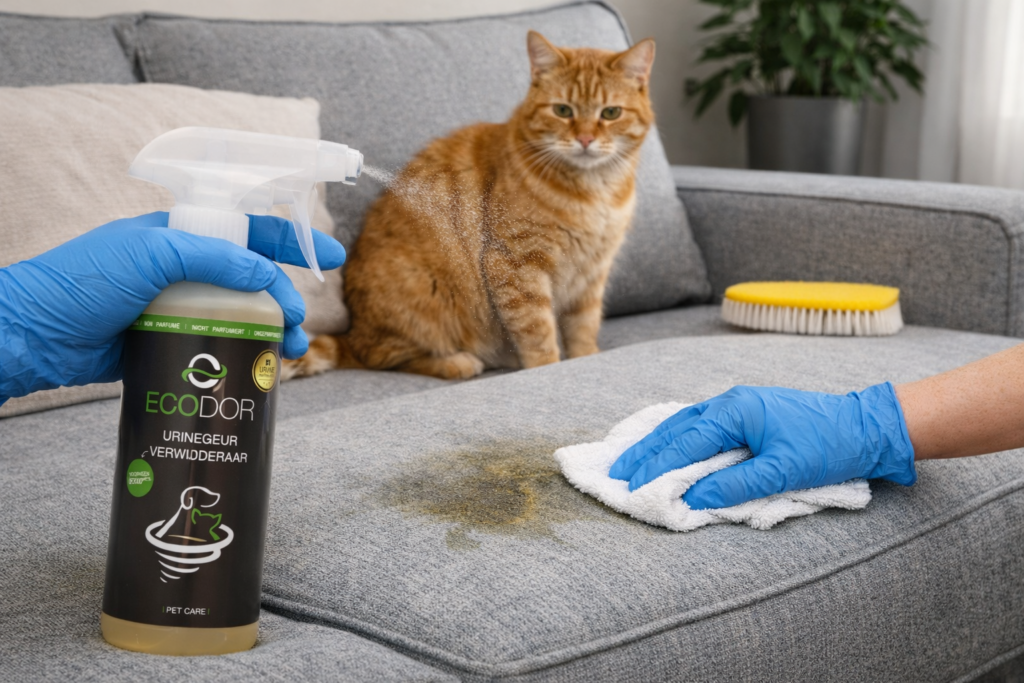
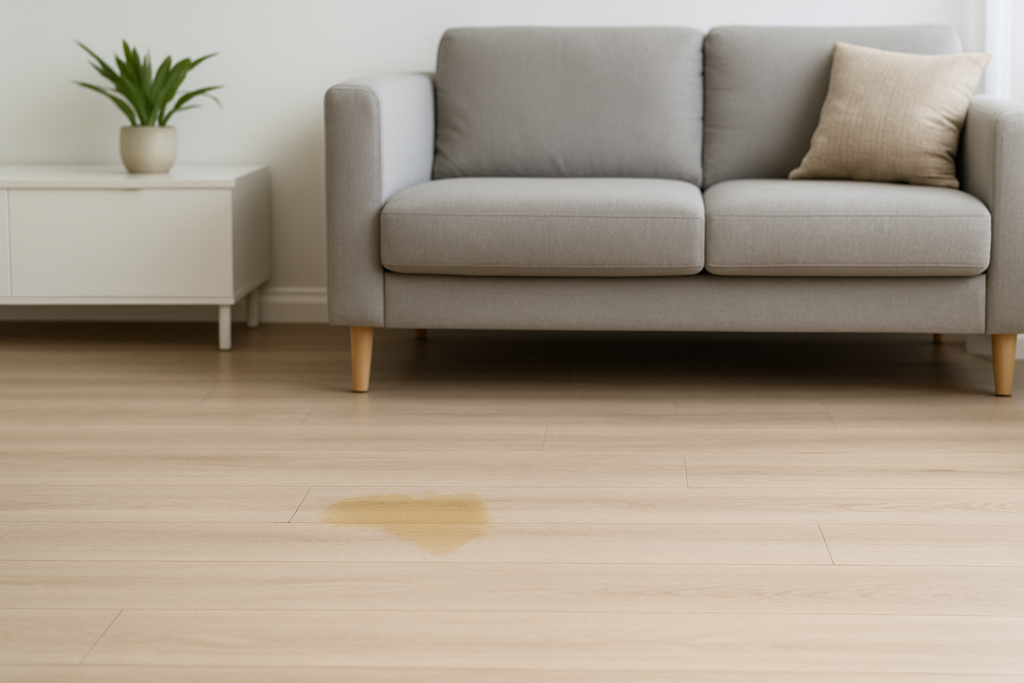
Cat urine in your couch can cause a persistent, penetrating odor that regular cleaning products simply cannot remove. This is because urine crystals soak deep into the fabric and padding. In this guide, you’ll learn why common household remedies don’t work and how an enzymatic urine odor remover can permanently eliminate the smell. You’ll also get a clear step-by-step approach, common mistakes to avoid, and tips to prevent it from happening again.
Category Archives: Guide to Removing Urine Odor
In this guide, you’ll find everything you need to know about effectively removing urine odor in your home. Whether it’s cat urine, dog urine, or human accidents—using the right approach and Ecodor’s natural products, you can thoroughly and safely eliminate both odor and stains. Read practical tips for carpets, concrete, wood, mattresses, and more.
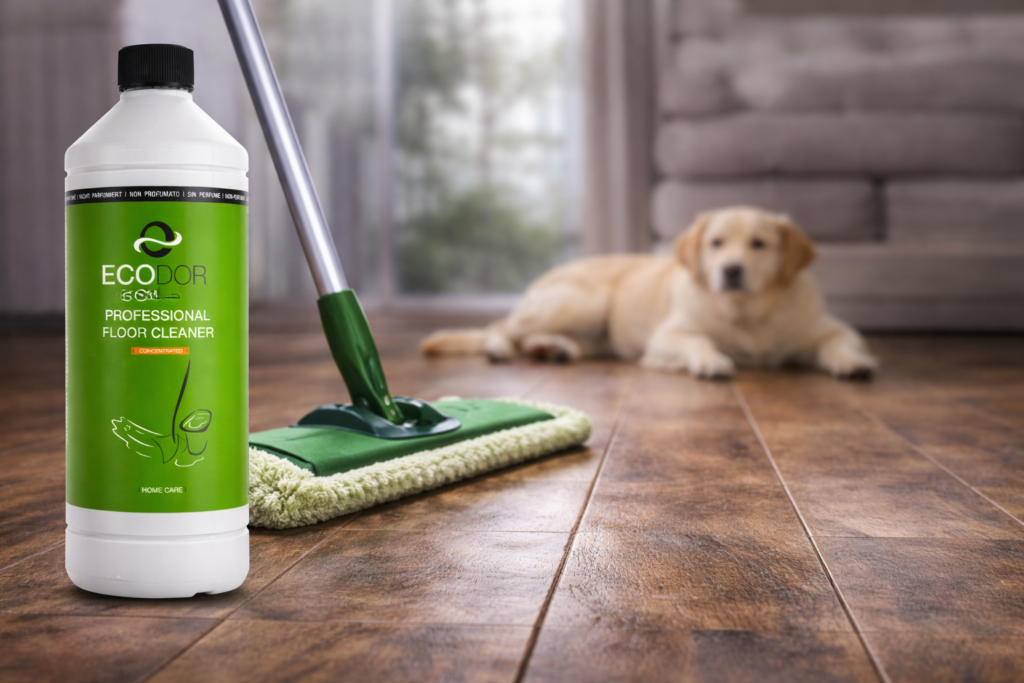
EcoFloor floor cleaner is a powerful and environmentally friendly solution for cleaning and deodorizing floors. Unlike many standard cleaning products, EcoFloor not only removes dirt but also helps neutralize unpleasant odors. Thanks to its concentrated formula, the product is very economical to use: with just two capfuls per bucket of water, one bottle lasts a long time.
For stubborn pet urine odors, it is important to first tackle the odor at its source with UF2000 (4Pets). After that, EcoFloor ensures that the floor remains clean and fresh. Together, these products form an effective combination for a hygienic and odor-free home.
Cat urine has a strong and persistent smell due to ammonia, urea, and proteins that undergo a chemical reaction when drying. Many cleaning products only mask the odor instead of breaking it down.
Common mistakes include using chlorine, bleach, all-purpose cleaners, or vinegar, and not cleaning deeply enough, causing the odor to linger in floors, grout, or textiles.
The right approach: Use an enzymatic odor remover such as UF2000 4Pets by Ecodor, which breaks down odor molecules at a molecular level and is safe for humans and pets.
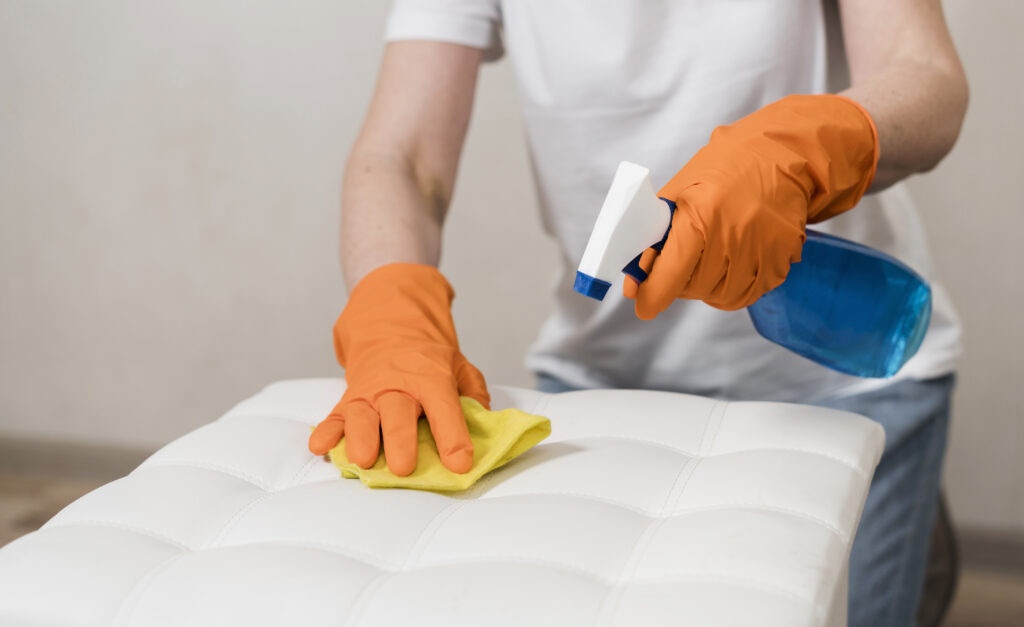
Step-by-step guide:
Blot excess urine with paper towels.
Apply UF2000 generously to the affected area.
Let the product work for at least 24 hours and air dry.
Repeat if necessary.
Why does a cat urinate outside the litter box? Possible reasons include a dirty or inaccessible litter box, stress, changes in the home, or medical issues such as bladder infections or kidney problems. If in doubt, consult a veterinarian.
For more detailed information on specific surfaces, refer to guides for concrete, carpet, wooden floors, and leather. Let me know if you need further assistance!